

Most businesses think reputation management means replying to reviews.
It doesn’t.
It means identifying risk before it becomes revenue damage.
And that’s where a Reputation Risk Audit comes in.
What Is a Reputation Risk Audit?
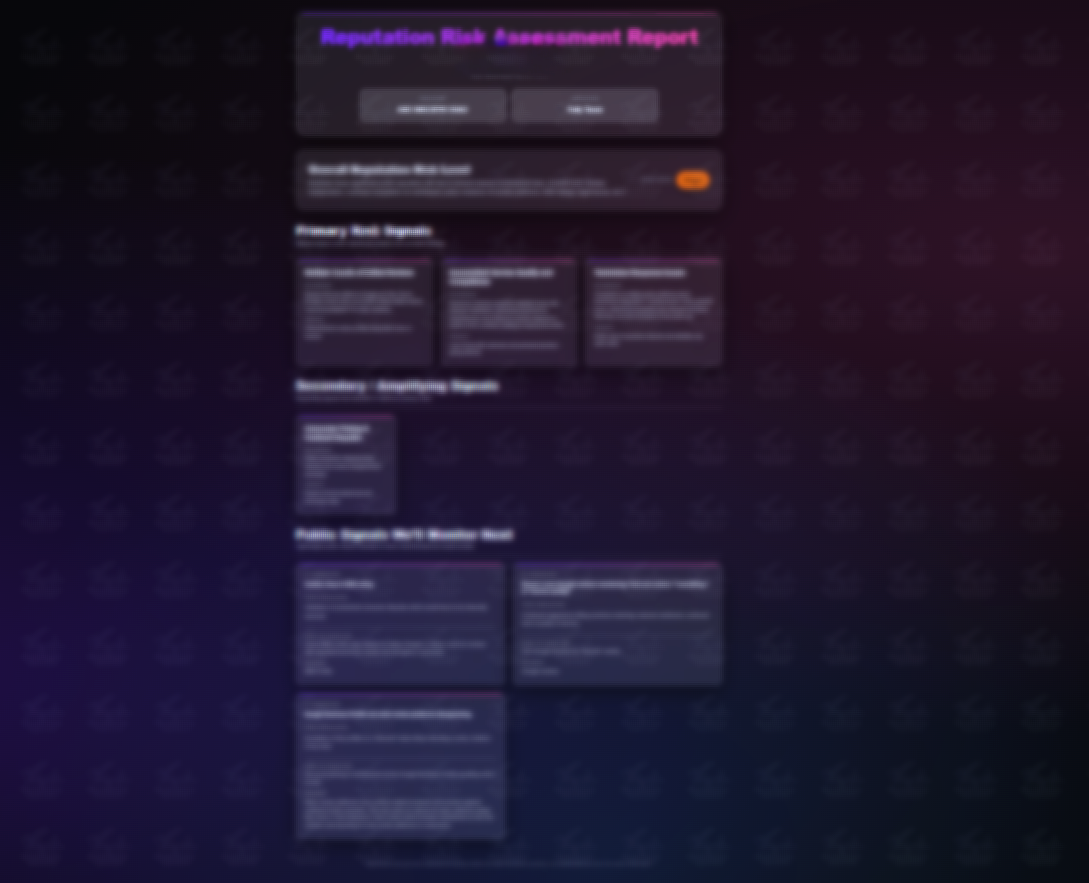
A Reputation Risk Audit is a structured analysis of a business’s publicly available review data to identify patterns, volatility, and risk signals that may impact revenue, hiring, compliance, or long-term brand stability.
Unlike traditional review management, which focuses on responding to or generating reviews, a reputation risk audit evaluates:
- Rating fluctuation over time
- Review velocity trends
- Sentiment intensity and thematic clustering
- Platform inconsistencies
- Recurring complaint patterns
- Language indicating systemic operational weaknesses
It is analytical — not reactive. The goal is not to “fix” reviews. The goal is to detect instability before it becomes visible decline.
The Dangerous Lie About “Good Reviews”
If you have 4+ stars, you’re safe.
Right?
WRONG.
A business can have:
- 4.3 stars
- 200 reviews
- Decent sentiment
And still be sitting on structural risk. Because star ratings are surface metrics.
They do not reveal:
- Volatility patterns
- Review velocity spikes
- Sentiment clustering
- Complaint theme concentration
- Legal or compliance exposure
That’s where businesses get blindsided.
What a Reputation Risk Audit Actually Does
A Reputation Risk Audit does not “clean up reviews.” It analyzes public signals.
It evaluates:
- Review trends over time
- Negative review concentration themes
- Rating fluctuation frequency
- Platform discrepancies (Google vs Yelp vs industry platforms)
- Language patterns that signal systemic issues
It identifies instability.
Because instability is what damages trust.
Why Reputation Damage Rarely Happens All At Once
Reputation collapse is rarely dramatic. It’s gradual. You don’t go from 4.5 to 2.1 overnight.
You go from:
4.6 → 4.4 → 4.3 → 4.1
And leadership says:
“We’re still above 4 stars. We’re fine.” But internally?
- Complaint patterns are repeating.
- Review velocity is increasing during certain months.
- Customer sentiment shifts subtly from “excellent” to “good” to “okay.”
That drift is risk. Scary part? Most businesses don’t see it.
The Difference Between Management and Risk Assessment
Traditional review management focuses on:
- Responding to reviews
- Generating more 5-stars
- Suppressing negative exposure
A Reputation Risk Audit focuses on:
- Identifying structural weaknesses
- Detecting recurring dissatisfaction themes
- Flagging volatility before rating collapse
- Assessing long-term stability
One is reactive. One is analytical.
Why High Ratings Can Be More Dangerous Than Low Ratings
A 3.8-star business knows it has a problem. A 4.3-star business often believes it doesn’t.
That confidence gap creates blind spots. Leadership always stops looking deeper.
When complaint themes repeat under a “good” rating, they often indicate process failures that haven’t reached crisis stage yet. That’s the danger zone.
Why Reputation Risk Audits Matter
Reputation is not just branding — it’s measurable business impact.
Research consistently shows:
- Consumers trust online reviews at rates comparable to personal recommendations (BrightLocal Consumer Review Survey).
- A one-star increase on major platforms can correlate with measurable revenue gains in certain industries (Harvard Business School research on online reviews).
- Sudden rating volatility can influence hiring perception and employer brand attractiveness.
While most businesses focus on average star ratings, research suggests that patterns, recency, and consistency often influence consumer trust more than the raw score alone.
A Reputation Risk Audit shifts the focus from vanity metrics to structural signals.
Who Actually Needs a Reputation Risk Audit?
Businesses that:
- Are scaling
- Are hiring aggressively
- Are attracting investor attention
- Operate in regulated industries
- Have experienced rating fluctuation
- Depend on public trust
Because reputation instability impacts:
- Hiring
- Sales conversion
- Vendor confidence
- Compliance exposure
- Long-term brand equity
What We Analyze in a Reputation Risk Audit
At ReviewLine Reputation, we evaluate:
- Review distribution patterns
- Sentiment intensity
- Thematic clustering
- Review frequency irregularities
- Reputation volatility over time
- Public-facing narrative consistency
All using publicly available review data. No manipulation. No suppression. No artificial inflation. Just analysis.
The Quiet Reality
Most businesses don’t fail because of one bad review. They fail because they ignore patterns. A Reputation Risk Audit surfaces those patterns before they escalate. That difference is what separates brand stability from brand erosion.
Final Thought
If you only monitor your average star rating, you’re monitoring the symptom. A Reputation Risk Audit monitors the structure underneath it. Structure determines whether your reputation is stable, or just temporarily intact.